Maine Coon Size and Largest Record: How Big Maine Coons Really Get
The direct answer
Maine Coon cat size is easy to notice: Maine Coons are among the largest domestic cat breeds, and most people notice the difference as soon as they see one next to an ordinary house cat.
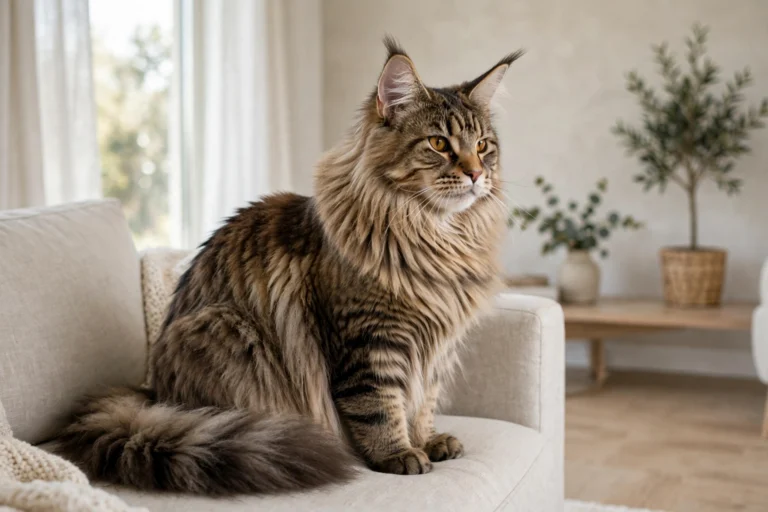
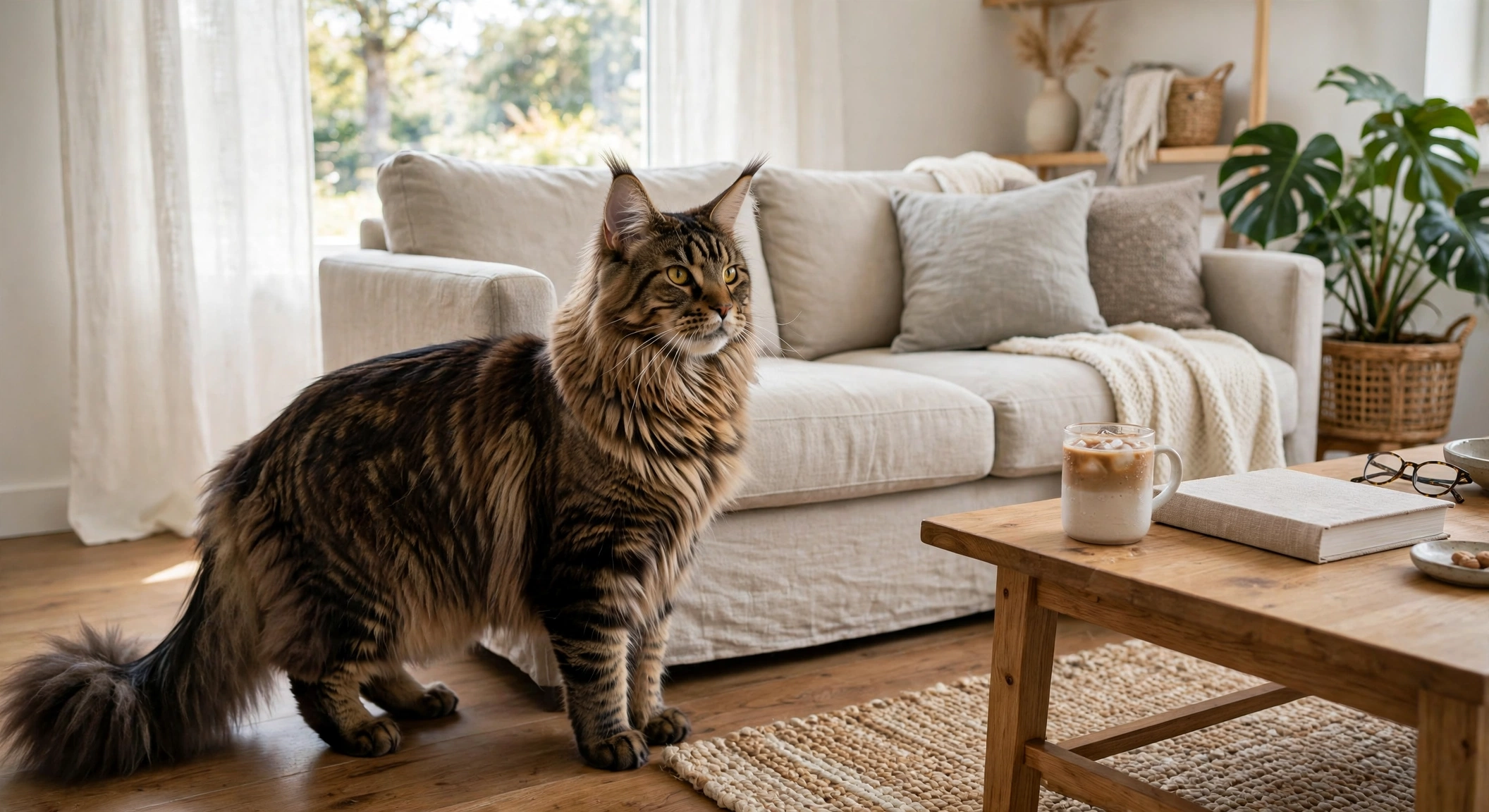
An adult Maine Coon usually looks long, tall, and solid, with a broad chest, a long bushy tail, and a substantial frame that fills more space on a sofa or a lap. That impression is not only about weight, because length, height, bone structure, and coat can all make the same cat look larger.
In general, adult males tend to be larger than adult females, and Maine Coons take longer to reach full size than many other breeds. A young Maine Coon may look like a normal kitten at first, then keep growing steadily through its second and third years. For readers exploring other breeds, the Cat Breed Guides category puts Maine Coons in context with other large and medium breeds.
Size alone does not tell you whether a cat is healthy, and a smaller Maine Coon can still be a typical example of the breed. Genetics, sex, early growth, feeding, activity, and general body condition all play a part, and individual cats vary even within the same litter. The sections below separate what is typical from what is exceptional, so you can judge size without chasing an unrealistic record figure.
Maine Coon cat size: how big Maine Coons usually get
When it comes to Maine Coon cat size, a typical adult Maine Coon is noticeably larger than a typical mixed breed house cat, but it is not a giant animal in the everyday sense. Most adults have a long body, long legs, and a tail that can reach a considerable length, which adds to the visual impression of size. Their coat is thick in places, especially around the neck and tail, so a cat can look larger than its actual frame suggests.
Height is usually measured at the shoulder, while length is measured from the nose to the base of the tail, or in some record contexts from nose to tail tip. Those methods give different answers, which is one reason size claims online can be hard to compare. A cat that sounds very long in one article may have been measured nose to tail tip, while another may have been measured to the base of the tail.
Body shape matters as much as overall size. Maine Coons are described in breed material as rectangular and muscular rather than round or compact, so they often look longer and more stretched out than a stockier breed of similar weight. Breed descriptions published by The International Cat Association (TICA) present the Maine Coon as a large and substantial breed, which matches what most owners see at home.
Size by sex
Sex is one of the clearest factors in Maine Coon size, and it is useful to compare males with males and females with females rather than judging every cat against one average. Adult males are generally larger, taller, and heavier in build than adult females, with broader heads and more substantial bone structure. Adult females are often still large by house cat standards, but they tend to be more moderate in frame and overall bulk.
This difference shows up gradually rather than all at once. Male and female kittens may look fairly similar in the first months, and the gap usually becomes clearer during adolescence and early adulthood. That is why a young female should not be judged against an adult male, and why photos of very large males can set an unfair expectation for a female kitten.
Owners sometimes ask whether a cat is small for the breed after seeing a large male online. In many cases the answer is simply that the cat is female, young, or from a smaller family line, and none of those points alone is a cause for concern. If growth or body condition worries you, that question belongs in a conversation with a veterinarian rather than in a comparison with a photo.
Growth timeline: slow and steady
Maine Coons are slow maturing cats, and that slow timeline is one of their most distinctive size traits. Many house cats reach close to adult size within their first year, while a Maine Coon often keeps filling out and gaining substance well beyond that point. Owners may notice steady growth in height and length first, followed by a longer period when the chest broadens and the body looks more solid.
Growth is not a straight line. Kittens grow quickly in the early months, then growth slows during adolescence, then the cat spends more time maturing in shape rather than simply getting longer. Coat development can also change the look of the cat during this period, so a cat may appear larger in some months simply because its coat is fuller.
The table below uses growth stages rather than exact figures, because exact ranges vary by sex, family line, and individual development. Use it as a guide to what owners typically observe, not as a target that every cat must hit at a set age.
| Growth stage | What owners typically observe |
|---|---|
| Kitten | Rapid early growth, long legs starting to show, playful and very active, still small beside an adult |
| Adolescent | Noticeable length and height gains, body still lean and lanky, tail and ears becoming more prominent |
| Young adult | Close to adult height and length, body starting to fill out, chest and shoulders looking more substantial |
| Fully mature adult | Full frame and mature body shape, coat and overall presence at their most developed, growth largely complete |
A cat that is still growing at two or three years old is not necessarily behind schedule for this breed. Equally, a cat that reaches its mature shape earlier is not necessarily small in a worrying way. The useful comparison is the same cat over time, not a single measurement taken on one day.
How to measure your Maine Coon
Home measuring works best when you keep the method the same each time, because a small change in method can change the result more than a month of real growth. Measure when your cat is calm and relaxed, and ask another person to help if your cat moves a lot. A soft measuring tape is easier to use than a rigid ruler, and it follows the body without pressing hard.
For length, measure along the body from the tip of the nose to the base of the tail while your cat is standing or stretched out naturally. For height, measure from the floor to the top of the shoulder while your cat is standing squarely. For the tail, measure separately from base to tip if you want that figure, and note which method you used so future measurements stay comparable.
Record the date, the method, and the result together, and repeat the measurement in the same position next time. A single measurement is a snapshot, while a short series over several months shows the pattern of growth. If your cat dislikes measuring, keep the session short, offer calm praise, and try again another day rather than forcing the cat to stay still.
What affects Maine Coon cat size
Genetics has the largest influence on how big a Maine Coon becomes, and family lines can differ in a clear way. Kittens from larger parents often grow larger, while kittens from smaller lines often stay more moderate, even with the same care. That is why two healthy Maine Coons can look quite different in size and still both fit the general breed picture.
Sex, as described above, is the next major factor, followed by the overall pattern of growth during kittenhood and adolescence. General feeding and activity matter for healthy development, and practical feeding guidance for cats in general is covered in the Cat Food and Feeding category. Feeding should support steady growth and a healthy body condition, not push a cat toward a target size, and any feeding change for a growing cat is best discussed with a veterinarian.
Activity, play, and everyday movement help a cat build muscle and stay in good condition, but they do not turn a genetically smaller cat into a very large one. Body condition is a better guide than size alone, because a cat can be large and under-conditioned, or moderate in size and in excellent condition. Owners should look at overall shape, movement, energy, and appetite as a whole picture, not at one number in isolation.
This guide is general information only, not veterinary advice, diagnosis, or treatment, and you can read more about how this site presents general guidance on our About page if you want background, while any health concern about growth, appetite, movement, or body condition should be discussed with a veterinarian. Slow growth, sudden weight change, or a clear change in behaviour is a reason to seek veterinary advice, not a reason to guess from an online size chart.
The largest record in context
Maine Coons often appear in conversations about record-breaking cats because some very long domestic cats have been Maine Coons. Record claims usually focus on length, not weight, and that distinction matters, because a long cat is not always the heaviest cat, and a heavy cat is not always the longest. Record bodies also use strict measuring rules, so a home measurement and an official record measurement are not always directly comparable.
Records change over time as new cats are measured and verified, and older articles can quickly go out of date. A record figure quoted in an old blog post may no longer match the current record, and a cat described as a record holder in one year may later be replaced. For that reason, this guide does not present one record length as a permanent fact, and readers who want the current record should check the current listing from the record body itself.
The useful lesson from record cats is simpler than any single figure. Record Maine Coons show the upper end of what the breed can reach, but they do not set the standard for a normal pet Maine Coon. Most pet Maine Coons will be large and impressive without coming close to a record length, and that is normal. Chasing a record size as a goal for a pet cat is not a practical or helpful standard.
Living with a large cat
A large cat needs practical space rather than special treatment, and most adjustments are simple. A sturdy scratching post, a roomy bed, and a carrier that fits an adult cat comfortably will make daily life easier. Cats also appreciate vertical space and room to stretch, and behaviour and home setup ideas are covered in the Cat Behaviour and Care category.
Large cats may also need a little more patience during grooming routines, vet visits, and travel, simply because handling a bigger animal takes more care. Keep routines calm and consistent, and let the cat get used to a carrier, a bed, or a new piece of furniture gradually. A cat that feels secure in its space is more likely to settle, rest, and play normally.
Size can affect everyday choices such as litter box size, food bowl stability, and door access, but these are practical matters rather than medical ones. Choose items that fit the adult cat you have, not the kitten you brought home, and replace items as your cat grows. That small habit avoids many of the frustrations owners report with large breeds.
Final note
Maine Coon cat size is best understood as a range, not a single target. Expect a long, tall, and substantial adult cat, expect males to be larger than females on average, and expect growth to take time. Judge your cat by its own steady development, its body condition, and its everyday health and behaviour, and let record figures stay where they belong, as interesting exceptions rather than everyday goals.
How big do Maine Coons get?
Maine Coon cat size stands out because Maine Coons are among the largest domestic cat breeds, and adults are usually noticeably longer, taller, and more substantial than a typical house cat. Males tend to be larger than females, and individual cats vary by family line and development. Size should be judged by overall frame and body condition, not by one measurement alone.
Are male Maine Coons bigger than females?
Yes, in general adult males are larger than adult females, with broader heads and more substantial bone structure. Females can still be large by house cat standards, but they are usually more moderate in frame. Comparing a female with a large adult male online can give a misleading impression of what is typical.
When do Maine Coons stop growing?
Maine Coons mature more slowly than many other breeds, and many keep developing in shape and substance beyond their first year. Height and length often settle earlier than full body maturity, and a cat may still fill out during its second and third years. Growth patterns vary, so the same cat measured over time gives a better picture than a single age target.
How can I measure my Maine Coon at home?
Use a soft measuring tape, measure length from nose to base of tail, measure height from floor to shoulder, and measure the tail separately if you want that figure. Keep the cat calm, use the same position each time, and record the date and method with the result. A short series of measurements over months is more useful than one measurement on one day.
Why is my Maine Coon smaller than expected?
A Maine Coon can be smaller than expected because it is female, still young, or from a smaller family line, and none of those points alone means something is wrong. Photos of very large males and record cats also set expectations that most pet cats will not match. If growth, appetite, movement, or body condition worries you, discuss it with a veterinarian rather than relying on an online chart.
What is the largest Maine Coon on record?
Record Maine Coons have been recognised for exceptional length, but records change over time and depend on strict official measuring rules. This guide does not present one record figure as permanent, because older figures often go out of date. Check the current record listing from the record body itself if you want the latest verified holder.
Does a large Maine Coon need a different home setup?
A large Maine Coon mainly needs practical adjustments, such as a sturdy scratching post, a roomy bed, a carrier that fits an adult cat, and enough space to stretch and move. Vertical space and calm routines also help. These are comfort and safety choices, not medical changes, and they work best when they fit the adult cat rather than the kitten stage.