Why Do Cats Sleep So Much? Normal Sleep, Age, and When to Ask a Vet
Why do cats sleep so much? The short answer
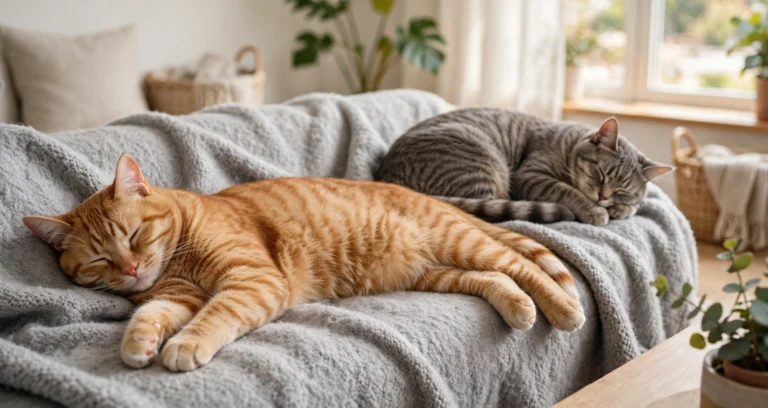
Why do cats sleep so much? Cats sleep a lot because sleep is a normal part of how they save energy, stay alert for short bursts of activity, and follow a natural daily rhythm. Most healthy adult cats sleep for a large part of the day, and kittens and senior cats often sleep even more. A cat that eats well, plays in short bursts, uses the litter box normally, and responds to you is often simply following a normal cat pattern. A sudden, large change in sleep is different from a steady habit, and that change is worth noting and discussing with a vet.
If you are new to cats, long naps can look like laziness or illness. In most cases, they are neither. Cats are built for short, intense activity followed by rest. They do not work, walk, or play for long stretches in the way many dogs do. Their bodies are designed to rest, watch, and then move quickly when something interesting happens. Once you understand why do cats sleep so much, it is easier to tell normal rest from a change that needs attention.
Why do cats sleep so much, and how much sleep is normal
There is no single exact number that fits every cat. Breed, age, health, activity level, and home routine all affect sleep. The ranges below are general guides only. They describe what many cats do, not a rule that every cat must follow. Individual cats vary, and exact hours are not a diagnosis.
| Life stage | General sleep range in 24 hours | What is common |
|---|---|---|
| Kitten, up to about 6 months | About 18 to 22 hours | Very long sleep, with short bursts of play and feeding |
| Young adult, about 1 to 6 years | About 12 to 16 hours | Long naps during the day, more activity at dawn and dusk |
| Mature adult, about 7 to 10 years | About 13 to 18 hours | Gradually longer rest, but still regular play and interest in surroundings |
| Senior, about 11 years and older | About 16 to 20 hours | More rest and slower movement, with shorter active periods |
Kittens sleep a great deal because growth, learning, and play use a lot of energy in short bursts. They may fall asleep suddenly after play, and that is a common kitten pattern. Adult cats tend to settle into a routine shaped by feeding times, light, and household activity. Senior cats often rest more because their bodies move more slowly and they tire sooner, but they should still wake, eat, drink, and show interest in their surroundings.
A cat that sleeps at the higher end of a range is not automatically unwell, just as a cat at the lower end is not automatically restless. What matters most is the pattern over time. A steady pattern that fits your cat is more useful information than one single long nap. Keep a simple note if you are unsure, such as when your cat is awake, eating, and playing, and look for a change over days rather than hours.
Why cats are crepuscular
Many cats are crepuscular, which means they are most active around dawn and dusk. This is different from being nocturnal, which means being active mainly at night, and different from being diurnal, which means being active mainly during the day. A crepuscular pattern fits the times when many small prey animals are also active in the wild. Even indoor cats often keep some of this rhythm, so they may be lively early in the morning and again in the evening.
This rhythm helps explain why a cat can sleep through much of the middle of the day. The cat is not ignoring you. It is resting during a quieter part of its natural cycle. Light, feeding times, and your own routine can shift this pattern a little, but many cats still show clear dawn and dusk peaks. Play sessions in the early evening can be a practical way to match this rhythm, because they give the cat an outlet for energy before a quieter night period.
Cats also sleep in light and deep stages. During light sleep, a cat may rest with ears moving and eyes partly open, and it can wake quickly if it hears a sound. During deeper sleep, the body is more relaxed, and the cat may twitch, move its paws, or flick its ears. This mix of light and deep sleep is normal. A cat that wakes easily from light sleep is not necessarily a poor sleeper. It is staying alert to its surroundings, which is a natural cat behaviour.
Energy saving and hunting instinct
Cats are hunters by instinct, even when they live indoors and never need to catch food. Hunting in the wild takes short bursts of speed, focus, and strength, followed by rest. A cat that saves energy during quiet hours is better prepared for those bursts. This is one reason why a well fed indoor cat can still sleep for most of the day. Food in a bowl does not remove the instinct to rest between bursts of activity.
Play matters here because it gives an indoor cat a safe way to use that hunting energy. Short play sessions with a wand toy, a ball, or a puzzle feeder can help a cat feel settled afterwards. A cat with no play, no window view, and no change in its environment may sleep more simply because there is little to do. That is not the same as being tired in a medical sense. It may be a sign that the home routine needs more interest, such as play, climbing space, or a safe place to watch outside.
Feeding routine can also shape sleep. Cats that are fed at regular times often settle into a pattern of eating, grooming, and then resting. A large meal followed by a nap is common. For general feeding background, the cat food and feeding guides explain routine and portion ideas in general terms, and they are a useful place to review feeding habits alongside sleep habits. If feeding times change a lot, sleep times may shift too, because the cat is adjusting to a new daily pattern.
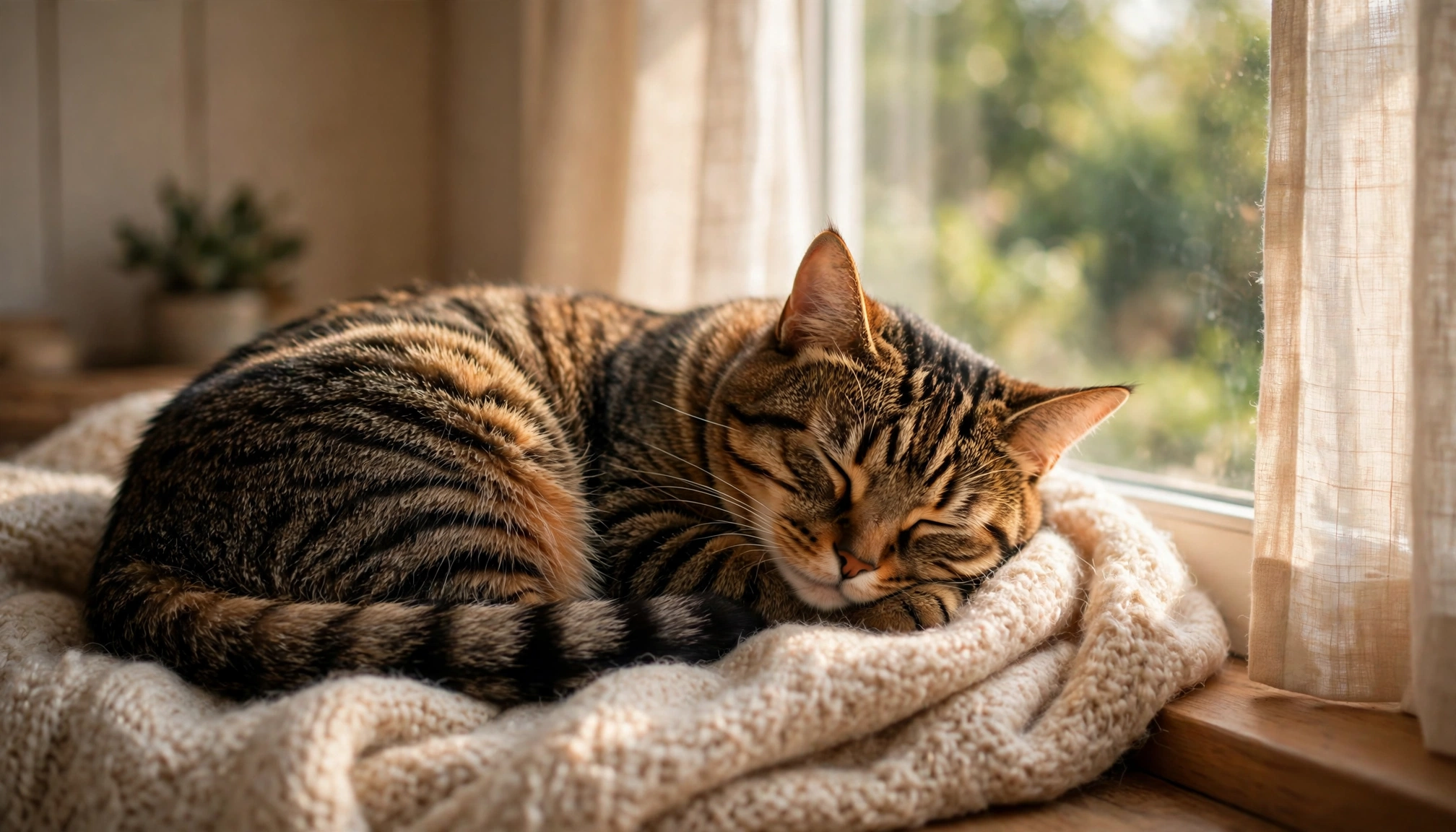
Temperature and comfort also play a part. Cats often seek warm, quiet, and safe spots for sleep, such as a sunny window, a soft blanket, or a high shelf. A cat that moves between sunny spots during the day is often following warmth and comfort, not showing a problem. In colder weather, many cats rest more and seek warmer places. In hot weather, a cat may rest in a cooler spot and move less during the warmest hours. These are general seasonal patterns, not exact rules for every cat.
Sleeping positions in general terms
Sleeping positions can tell you something about comfort, but they do not diagnose health on their own. A cat curled in a tight ball is often keeping warm and protecting its body. A cat lying on its side with legs stretched out is often relaxed and comfortable in its surroundings. A cat sleeping in the loaf position, with paws tucked under its body, is often resting lightly and ready to move if needed. A cat sleeping on its back with its belly showing is often feeling safe in its home, because that position leaves the belly exposed.
None of these positions alone means a cat is well or unwell. What matters is whether the position fits the cat’s usual habits and whether the cat wakes normally, moves normally, and behaves normally afterwards. A cat that suddenly stops using a favourite sleeping spot, or suddenly cannot settle in any position, is showing a change worth noting. A single new position for one nap is usually just comfort or temperature, not a warning sign by itself.
Cats also choose sleeping spots for safety and height. A high perch gives a good view of the room and a sense of control. A covered bed gives quiet and privacy. A spot near a trusted person gives warmth and company. Giving a cat more than one safe sleeping option can help it rest well, especially in a busy home. If a cat has no quiet spot, it may sleep in short, broken naps and seem restless, even though it is simply struggling to settle.
What changes how much a cat sleeps
Age is one of the largest factors. Kittens and senior cats sleep more than young adults, as the table above shows. Activity level is another major factor. A cat that plays, explores, and climbs will often sleep soundly afterwards, while a cat with little stimulation may sleep out of boredom. A new home, a new pet, a house move, or a change in your work hours can also change sleep for a short time while the cat adjusts.
Environment matters more than many owners expect. A noisy home, a busy hallway, or a sleeping spot that is often disturbed can lead to broken rest. A calm, warm, and safe sleeping area helps a cat settle. Weather can also shift sleep in general terms, with many cats resting more in cold or very hot periods and seeking warmer or cooler spots. These changes are usually gradual and linked to a clear cause, such as a season change or a new routine.
Health, pain, and stress can change sleep too, but this article does not diagnose any condition. The point is simpler: a change in sleep is information, not a diagnosis. If sleep changes at the same time as eating, drinking, litter box habits, movement, or behaviour, that combination is more important than sleep alone. A cat that sleeps more and also stops eating, hides much more than usual, or struggles to move should be seen by a vet promptly, because those combined changes need professional assessment.
Routine changes in the home can also be managed in a practical way. Keep feeding times steady where possible, offer play before quiet periods, and give the cat a calm sleeping spot away from heavy foot traffic. The cat behaviour and care guides cover everyday behaviour and care routines in general terms, and they can help you review whether a sleep change lines up with a routine change. If the sleep change has no clear cause, or it keeps getting larger, a vet visit is the safer next step.
When to ask a vet
Most long naps are normal, but some changes are worth a vet visit. Ask a vet if your cat suddenly sleeps much more or much less than usual for more than a day or two, and the change does not link to a clear routine or weather change. Ask a vet if your cat is hard to wake, seems weak when awake, or stops showing interest in food, play, or people. Ask a vet if sleep changes come with reduced appetite, reduced drinking, vomiting, diarrhoea, difficulty moving, limping, hiding, or changes in litter box habits.
You should also ask a vet if a senior cat changes suddenly, rather than gradually. Gradual change with age is common, but a sudden change in an older cat is a clearer reason to seek advice. The same applies to a kitten that suddenly becomes much less active or stops eating and playing. Kittens have less reserve than adult cats, so a sudden change should not be left for days. In all cases, note when the change started, what else changed, and whether food, water, and litter box habits changed too, because that record helps the vet assess your cat.
This guide is general information only, not veterinary advice, diagnosis, or treatment, and you should consult a veterinarian for health problems, especially for sudden sleep changes. The About page explains that this site shares general guides for cat owners, not professional veterinary advice for an individual cat. If you are ever unsure whether a change is normal, asking a vet is better than waiting and guessing. A vet can examine your cat, ask about its history, and decide whether any tests or follow up are needed.
How to support healthy sleep at home
Healthy sleep starts with a steady daily routine. Feed at similar times each day, offer play in short sessions, and keep a calm sleeping area that the cat can reach easily. A cat that knows when play and food happen often settles more easily between those times. Avoid waking a sleeping cat for play unless you need to, because broken rest can make a cat groggy and less willing to play later.
Give your cat safe choices for rest. A warm blanket in a sunny spot, a quiet covered bed, and a high perch all serve different needs. Cats often rotate between spots during the day, and that rotation is normal. Keep the sleeping area clean and dry, and avoid placing food, water, and litter boxes too close to the main sleeping spot, because cats prefer separate areas for eating, toileting, and rest.
Watch the whole cat, not just the hours slept. A healthy pattern usually includes eating, drinking, grooming, using the litter box, and showing interest in people or play at some point in the day. If those parts stay steady, long naps are usually just part of being a cat. If several parts change together, that pattern is worth a vet visit. The cat breed guides can also help you understand general breed tendencies, because some breeds are known to be more active or more relaxed, but breed alone never explains a sudden change.
Background reading from veterinary sources can help owners understand normal cat behaviour. Cornell University College of Veterinary Medicine is an established veterinary university source that publishes general feline health information for owners, and it is a useful starting point for learning how cats rest, play, and age in general terms. Use such sources for background only, and use your own vet for advice about your individual cat, because general guides cannot replace an examination.
Why do cats sleep so much?
Why do cats sleep so much? Because they are built for short bursts of activity followed by rest, and they save energy between those bursts. Most adult cats sleep for a large part of the day, and kittens and senior cats often sleep even more. Long naps are usually normal when eating, drinking, play, and litter box habits stay steady.
How many hours do cats normally sleep in a day?
Most adult cats sleep about 12 to 16 hours in 24 hours, but individual cats vary. Kittens may sleep about 18 to 22 hours, and senior cats may sleep about 16 to 20 hours. These are general ranges only, and exact hours are not a diagnosis. A steady pattern matters more than a single day of long sleep.
Do kittens sleep more than adult cats?
Yes, kittens usually sleep more than adult cats. Growth, learning, and short bursts of intense play use a lot of energy, so kittens often fall asleep suddenly after play. Very long sleep is common in kittens, but a kitten that suddenly stops eating or playing, or becomes hard to wake, should be seen by a vet.
Do senior cats sleep more than younger cats?
Yes, senior cats often sleep more than younger adult cats. They may move more slowly, tire sooner, and rest for longer periods. Gradual change with age is common, but a sudden increase in sleep, especially with reduced appetite or difficulty moving, is a reason to ask a vet.
Why is my cat most active at dawn and dusk?
Many cats are crepuscular, which means they are most active around dawn and dusk. This pattern fits the times when many small prey animals are active in the wild, and indoor cats often keep part of this rhythm. That is why a cat can sleep through the middle of the day and become lively in the early morning and evening.
Is it normal for a cat to sleep all day?
It can be normal for a cat to sleep for most of the day, especially if it wakes to eat, drink, play, and interact at some point. It is less reassuring if the cat is hard to wake, stops eating, hides much more than usual, or shows other changes at the same time. If several habits change together, ask a vet rather than assuming the sleep alone is normal.
When should I ask a vet about my cat sleeping more than usual?
Ask a vet if sleep increases or decreases suddenly and stays changed for more than a day or two, if your cat is hard to wake or seems weak, or if sleep changes come with reduced appetite, vomiting, diarrhoea, hiding, limping, or litter box changes. This guide is general information only, not veterinary advice, and a vet can examine your cat and decide what, if anything, needs follow up.